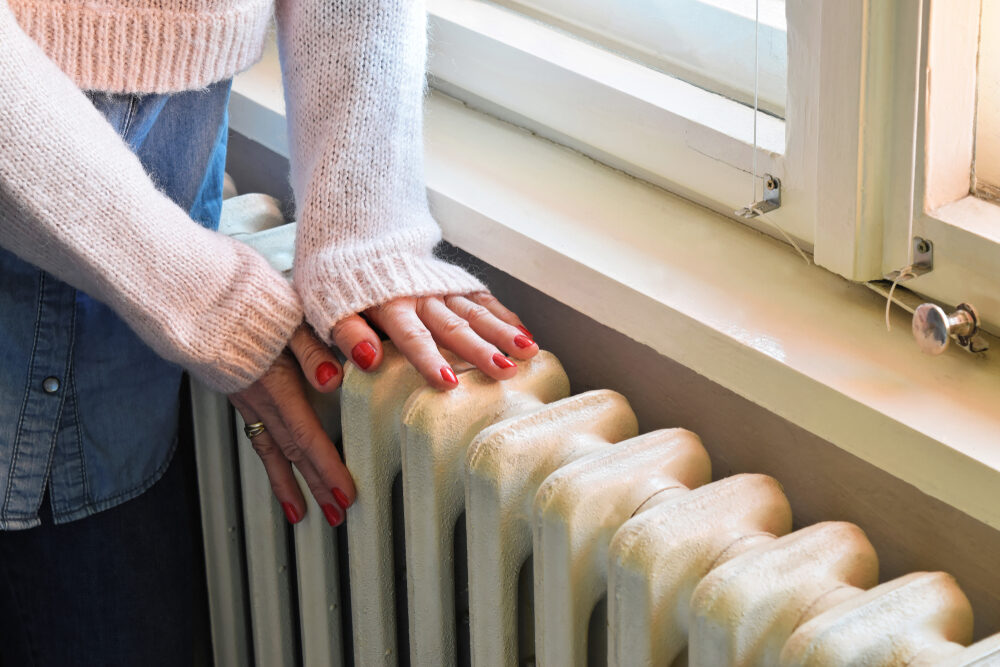
A radiator that runs hot along the bottom and stays stubbornly cold across the top almost always has air trapped inside it, and the fix usually takes under ten minutes per radiator with a bleed key and a small cup.
Air rises to the highest point in a hot water loop, where it displaces the water that is supposed to be carrying heat into the room. When you call a plumber in Bucks County from Barci Plumbing & Heating, you can learn the difference between a radiator that needs bleeding and one signaling a feeder, pressure, or circulation problem.
How Air Gets Into a Hot Water Loop
Hydronic systems are closed loops, so in theory the same water circulates for decades. In practice, fresh water enters every time the automatic feed valve tops off the system, and city water carries dissolved oxygen and nitrogen that come out of solution once the water is heated. Those gas bubbles collect at the high points: second and third floor radiators, long horizontal runs, and anywhere the piping rises before it falls.
Older homes in Doylestown, Newtown, and Levittown often run gravity-converted systems with oversized cast iron radiators and generous pipe diameters, which gives air plenty of places to park. A small pocket at the top of a radiator can cut that unit’s output by 20 to 40 percent while the rest of the house heats normally. Over a full winter, that imbalance shows up as one chilly bedroom and a boiler that runs longer than it should.
Hot Water or Steam? Confirm Before You Touch a Valve
Bleeding instructions written for hot water systems can cause real damage on a steam system, so identify yours first. The check takes a minute at the boiler.
- Hot water (hydronic): a circulator pump bolted to the piping, a pressure gauge reading roughly 12 to 25 psi, and a small manual bleed valve at the top of each radiator.
- One-pipe steam: a sight glass on the boiler, a pressuretrol set around 0.5 to 2 psi, and a bell-shaped air vent on the side of each radiator rather than a key valve.
Steam radiators vent air automatically through those side vents, so a steam radiator that stays cold at the far end usually needs a replacement vent (about $15 to $35 each) or pitch correction, not bleeding. The rest of this article covers hot water systems.
What You Need Before Bleeding
Gather the following so you are not hunting for a tool with a valve already open:
- A radiator bleed key (square, clock-style, or a flathead screwdriver depending on the valve)
- A small cup or bowl plus a rag, since the water that comes out is dirty and often rust-tinted
- A reading of your boiler pressure gauge before you start
- Access to the water feeder valve in case pressure drops during the process
How Often Should Radiators Be Bled?
Once a year at the start of the heating season is enough for most hot water systems, with a second pass if any radiator stays cold at the top. Systems that need bleeding every few weeks have a different problem, typically a passing feed valve or a failed expansion tank introducing fresh, oxygen-rich water.
Can I Bleed Radiators While the Heat Is Running?
It is safer to shut the boiler and circulator off and wait about 20 minutes first, because moving water pushes air past the bleed valve instead of letting it collect. Water in an active loop also leaves the valve at 160 to 180°F, hot enough to scald.
Bleeding a Hot Water Radiator, Step by Step
- Run the heat for 15 to 20 minutes so the system is hot and you can feel which radiators have cold sections, then shut the boiler or thermostat off and wait another 20 minutes for circulation to stop.
- Note the cold-system pressure on the gauge. Most two-story homes sit at 12 to 15 psi cold, climbing to 18 to 22 psi when hot.
- Start at the radiator closest to the boiler on the lowest floor and work outward and upward, finishing with the highest radiator in the house.
- Hold the cup under the bleed valve and open it roughly a quarter turn. You should hear a steady hiss of escaping air.
- Close the valve as soon as water runs out in a solid stream with no sputtering, usually 5 to 30 seconds later.
- Recheck the gauge after every two or three radiators. If pressure has fallen below 12 psi, add water slowly before continuing.
- Fire the boiler back up, let it run a full cycle, and feel each radiator again. A second pass the next day is normal on systems that have not been bled in years.
If a valve weeps after you close it, the packing or seat is worn. Replacement bleed valves are inexpensive, but on brittle 80-year-old cast iron we prefer to handle that swap rather than risk cracking a tapping.
Checking the Water Feeder and System Pressure
The automatic feed valve, usually a brass body mounted on the cold water line near the boiler with a backflow preventer ahead of it, holds the system at a preset pressure. On most homes that setpoint is 12 psi, which lifts water about 28 feet and is enough for two full stories plus an attic run. When the valve fails to close, the upper floors starve for water and go cold at the top no matter how often you bleed.
Watch the gauge over a week of normal operation. Pressure that creeps toward the 30 psi relief valve setting points to a feed valve passing water, a waterlogged expansion tank, or a leaking domestic coil. Pressure that keeps dropping points to a leak, an air vent that is dumping water, or a feeder that is not opening.
Expansion tanks deserve their own check. The common diaphragm type carries a 12 psi air charge on the dry side, and once that diaphragm fails the tank fills with water and the relief valve starts discharging.
When Cold Tops Point to Something Besides Air
If a radiator stays cold at the top after two proper bleeds, look at these causes in order:
- Sludge and magnetite buildup in the bottom channels of old cast iron, which restricts flow and shows up as a cold top and a lukewarm bottom
- A stuck thermostatic radiator valve that has seized partially closed, common on 1980s and 1990s retrofits
- A failed zone valve or circulator, where a whole zone underperforms rather than one radiator
- An air-bound air scoop or clogged automatic air vent at the boiler, which keeps re-introducing air into the loop
- Piping pitched the wrong way after a floor refinish or remodel, trapping air in a run that no longer drains back
Diagnosing those requires pressure and temperature readings at the supply and return, not guesswork. A delta-T much smaller than the typical 20°F design drop across a radiator generally means flow is restricted somewhere in that branch.
Why Is My Radiator Cold At the Top After Bleeding?
In roughly half the cases we see, the cause is sludge restricting the lower passages rather than air, and the second most common cause is a thermostatic valve seized partway shut. Both need a flow and temperature check at the radiator to confirm.
Does Bleeding Radiators Lower Boiler Pressure?
Yes. Bleeding six to eight radiators can drop a system 3 to 5 psi, which is why the gauge should be rechecked and the system refilled to 12 to 15 psi cold before the boiler restarts.
A Seasonal Routine for Older Homes
Homeowners who follow a short schedule rarely lose a room mid-January:
- Early October: run the heat a full cycle, bleed any radiator with a cold top, and verify cold pressure at 12 to 15 psi
- Monthly through the heating season: glance at the pressure gauge and listen for gurgling, which is the earliest sign of air returning
- Annually: have the boiler cleaned and combustion-tested, the low water cutoff flushed on steam units, and the expansion tank charge checked
- Every 3 to 5 years: inspect circulator flanges, air vents, and the backflow preventer, all of which are wear items
Can the Same Contractor Service a Boiler and a Water Heater?
In most cases yes, since both fall under plumbing and heating licensure in Pennsylvania. Our crews handle hydronic troubleshooting alongside work like tankless water heater installation in Bucks County, which often comes up once a homeowner is already replacing an aging boiler.
Schedule a Heating System Check With Barci Plumbing & Heating
If bleeding has not fixed a cold radiator, or your boiler pressure will not hold steady, our technicians can test the feeder, expansion tank, and circulation on a single visit. Contact Barci Plumbing & Heating to get on the schedule before the next cold snap.