
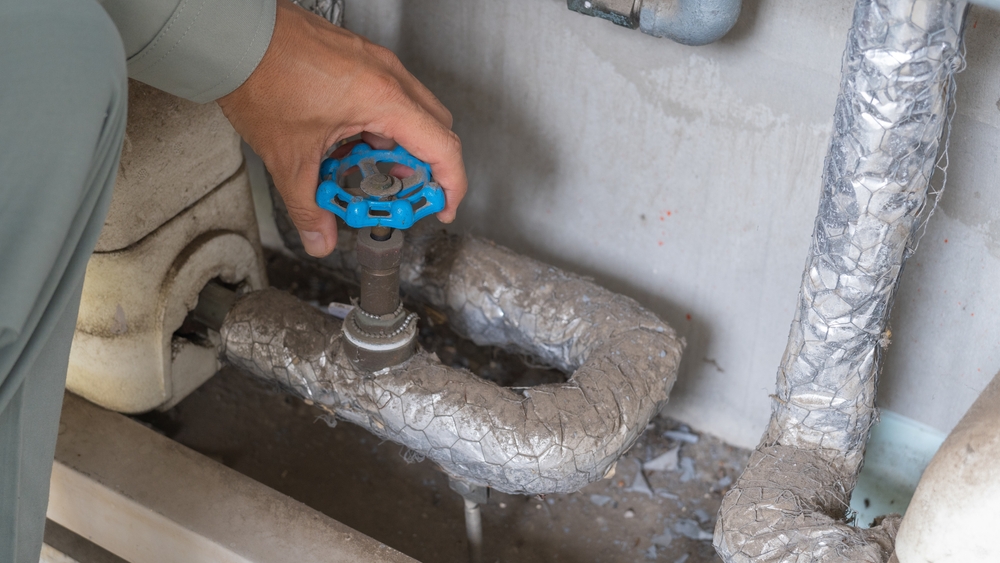
Your main water valve is the primary control that stops all water entering your home. Knowing where it’s located in the event of an emergency can save you thousands in water damage. In most homes the main shut-off is located where the supply pipe enters the building, usually in a basement, crawl space, garage, or utility closet. If your house has city water, there is often a valve before and after your water meter. On a well the shut-off is usually located at the well tank.
The team at Barci Plumbing & Heating recommends locating this valve long before you actually need it. Below, we walk through how to find it, how to close it properly, and what to check before an emergency forces the issue.
Why the Main Shut-Off Matters More Than People Think
A burst half-inch supply line can push out roughly 6 to 10 gallons per minute at typical household pressure of 40 to 80 psi. In Bucks and Montgomery county we have customers with pressure entering the home at 120-150 psi. That means a failure while you are at work can release thousands of gallons before anyone notices. Water damage and freezing claims are among the most common and most expensive homeowner insurance claims, according to the Insurance Information Institute.
The difference between a mopped-up floor and a gutted kitchen or basement is often two minutes. If you already know your main plumbing valve location, you win those two minutes back.
Where the Plumbing Main Water Shut Off Valve Is Usually Located
The plumbing main water shut off valve is located on the cold water supply line. With City or Municipal water the house side of the water meter. If you have a crawl space or a basement, walk the perimeter of your lowest level and look for the pipe that comes through the floor or the foundation wall. In the event your home is on a slab-meaning you do not have a basement or crawl space, there is commonly a centrally located utility room where the valve knuckles can be located coming out of the floor.
Common spots by home type:
- Basement homes: on the front foundation wall, often close to the street-facing side, near the water meter and pressure regulator.
- Slab or crawl space homes: in a utility closet, laundry area, or behind an access panel near the water heater.
- Garage: along the wall the supply enters, sometimes tucked behind shelving or a water softener.
- Apartments and condos: inside a hallway or bathroom access panel, with a building-wide shut-off controlled by management.
- Warm climates: outside, in a small in-ground box near an exterior wall or hose bib.
There is also a second valve at the street, called the curb stop, inside a buried box with a metal or plastic lid near the sidewalk or property line. That one usually needs a long curb key, and in many municipalities the utility prefers that only their crew or a licensed plumber operates it.
Know Which Type of Valve You Have
There are two designs you will run into, and they close differently:
- Ball valve: a lever handle that rotates a quarter turn. Handle parallel to the pipe means open, perpendicular means closed. These are reliable and common in homes built or repiped in the last 25 years.
- Gate valve: a round wheel handle you turn clockwise several full rotations. Older gate valves seize, corrode, or fail to seal completely once they pass 20 to 30 years of age.
How to Shut Off Plumbing to House: Step by Step
Here is how to turn off main plumbing valve hardware safely, whether you are dealing with a leak or prepping for a repair.
If you have ever wondered how to shut off plumbing to house supply lines without making things worse, follow this order:
- Stop and look. If water is near electrical panels, outlets or a submerged appliance, cut power to that area at the breaker first.
- Get to the valve. Clear anything stacked in front of it. Keep a flashlight and a pair of pliers or a pipe wrench nearby, not in the shed.
- Close it slowly. Turn a ball valve lever 90 degrees. On a gate valve, turn the wheel clockwise until it stops, without forcing it past resistance.
- Verify. Open the lowest faucet in the house. Flow should drop to a trickle and stop within 30 to 60 seconds.
- Drain the system. Open a basement or first-floor faucet and an upstairs faucet so the lines drain and pressure releases, which limits how much water keeps escaping from the break.
- Kill the water heater. Switch the electric breaker off or set a gas heater to “pilot” so the tank does not fire on an empty or partially drained vessel.
If the handle spins freely without stopping flow, the stem or gate has failed internally and needs replacement. Do not crank harder on a corroded gate valve, because snapping the stem turns a controlled shut-off into a genuine emergency plumbing water shut off situation at the curb.
Test the Valve Before You Ever Need It
Valves that never move are the ones that fail. Exercise your main shut-off twice a year, closing it fully and reopening it, then check for weeping around the packing nut or handle.
While you are down there, tag the valve with a bright label and take a photo on your phone so anyone in the household can find it. Adding a quarter-turn ball valve replacement typically runs $175 to $450 for a straightforward swap on accessible copper or PEX, more if the line has to be frozen or the curb stop is buried and inoperable. Fixing small leaks early also matters: the EPA notes household leaks waste nearly 1 trillion gallons nationwide each year in its Fix a Leak Week materials.
Other Shut-Offs Worth Knowing
The main valve is your last resort. Smaller, local shut-offs often solve the problem without cutting water to the whole house:
- Fixture stops: small oval or lever valves under sinks and behind toilets.
- Appliance valves: behind washing machines, dishwashers and refrigerators with ice makers.
- Water heater cold inlet: on the pipe entering the top of the tank.
- Outdoor sill cocks: often fed by a separate interior stop with a bleeder screw.
- Gas shut-off: at the meter, plus individual appliance valves, relevant for boiler and gas installation work.
Should I shut off the main water valve when I go on vacation?
Yes, for trips longer than 2 or 3 days, closing the main is one of the cheapest ways to prevent a supply line failure from flooding an empty house. Leave heat set to at least 55 degrees in cold weather, and switch the water heater to vacation mode.
My valve is closed but water still drips from the leak. Why?
Water trapped in the pipes above the break will keep draining for several minutes, and a worn gate valve may not seal completely. Open upstairs and downstairs faucets to relieve pressure, then have the valve inspected because partial closure means it is no longer dependable.
Commercial Buildings Are a Different Animal
In retail, restaurant, and multi-unit properties, the main shut-off may be tucked away inside a mechanical room, a sprinkler riser room, or an exterior vault with backflow prevention assembly. Shutting the wrong valve can trip a fire suppression system or instantly knock out water for every tenant. That’s why the team at Barci Plumbing & Heating recommends having a commercial plumber map the building alongside the property manager, clearly labeling each isolation point during an annual walkthrough.
For houses and duplexes, the same proactive approach applies at a smaller scale. A residential plumber from Barci Plumbing & Heating can easily label your main valve, meter, water heater, and individual fixture stops during any routine service call—often in under 20 minutes.
When to Call In Help Instead
Call a Barci Plumbing & Heating right away if you cannot locate the main, the valve leaks when you touch it, or water keeps flowing after the valve is closed. An emergency plumber can shut water at the curb, freeze a line to isolate a section, and repair the failure the same visit. Barci Plumbing & Heating handles this kind of call as a 24/7 plumber, including drainage backups and gas line work.
Hunting for the cheap plumber or what size water heater does a 4-person family actually need at 1 a.m. usually costs more in the end. Look instead for an affordable plumber who quotes the repair clearly, carries proper licensing and insurance, and pulls permits where required. That combination, not the lowest hourly number, is what makes someone the best plumber for an urgent job.
Locate or Replace Your Main Shut-Off
Barci Plumbing & Heating will find your main water valve, test it, label it, and replace it with a quarter-turn ball valve if it is past its service life. Call us for a quote, or for same-day emergency service if water is already running.